


Structure and principle of electric tar catcher
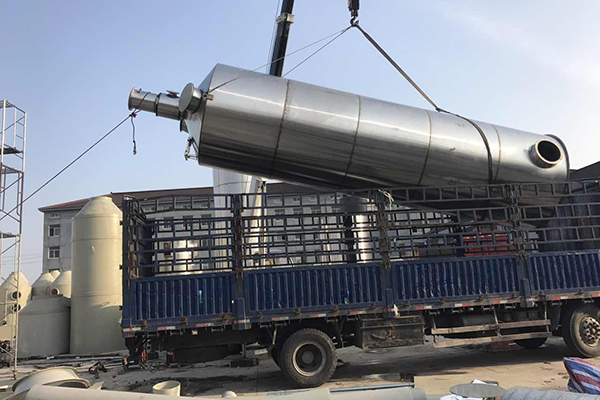
The electric tar catcher adopts three types of structures: concentric circle, tube and honeycomb. Regardless of the structure, its working principle is to apply high-voltage direct current between the metal wire and the metal tube wall (or plate) to maintain an electric field sufficient to ionize the gas and form a corona zone between the anode and cathode.
Working mechanism:
Gas discharge process: Under normal circumstances, the gas is not conductive, but under the action of a high-voltage electric field, the electrons inside the gas will obtain enough energy to become free electrons and conduct electricity, which is called spontaneous ionization. Spontaneous ionization of gas is established in a non-uniform electric field. In a uniform electric field, as the voltage increases, as long as ionization occurs at any point in between, the two poles will be immediately filled with charged ions, and the gas in the entire space is broken down. At this time, the current increases sharply to form a spark discharge. In a non-uniform electric field, the strength of the electric field decreases rapidly as the distance between the two poles increases.
Choices in industry:
Depending on the polarity of the power supply, corona is divided into negative corona and positive corona. In industrial production, negative corona is mostly used, because under the same conditions, negative corona can obtain a higher current than positive corona, and its flashover voltage is also much higher than positive corona discharge.
The main factors affecting the electric catching performance:
Since there are many factors that affect the operation performance of the electric tar catcher, please inform the density, viscosity, specific resistance, gas temperature, pressure, humidity, flow velocity and impurity concentration of the dust and mist droplets when selecting the model.

Build industry quality brand